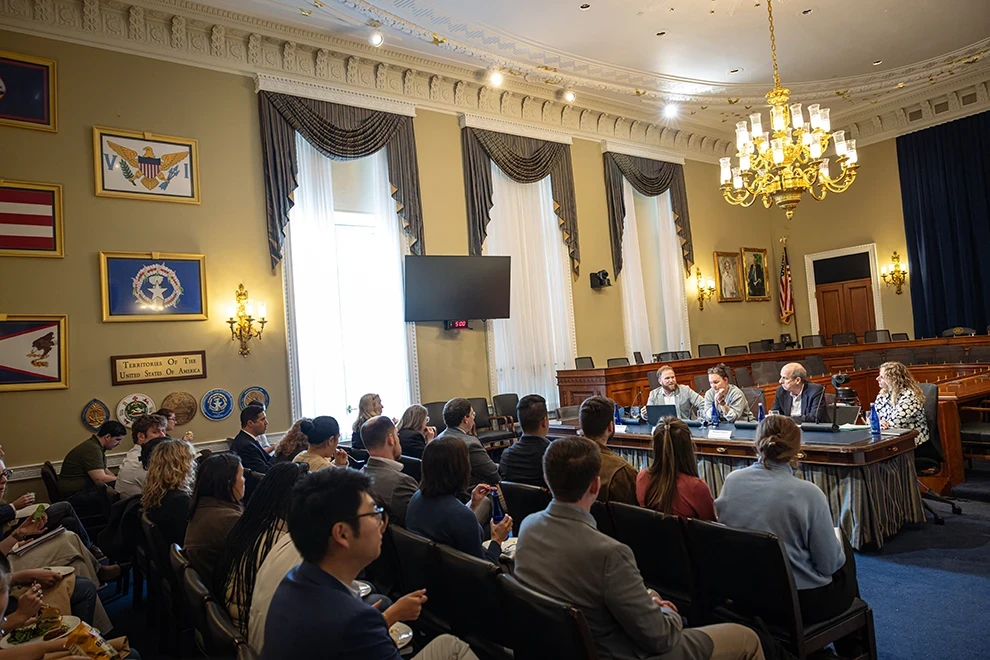
On October 28th, the Oceans Caucus Foundation (OCF) hosted the third briefing in its Magnuson-Stevens Act 50th Anniversary Briefing Series highlighting the important role of working waterfront communities to the fishing industry.
While the core mandate of the Magnuson-Stevens Fishery Conservation and Management Act (MSA) is science-based conservation and preventing overfishing, it also directly affects working waterfronts: the ports, docks, fish-processing facilities, and maritime infrastructure that connect coastal communities to the ocean. Working waterfronts are the shoreside foundation of the nation’s commercial fishing, recreational, and maritime economy, from the Gulf Coast and the Chesapeake Bay to New England, the Great Lakes, the Pacific Northwest, Alaska, Hawaii, and the U.S. territories.
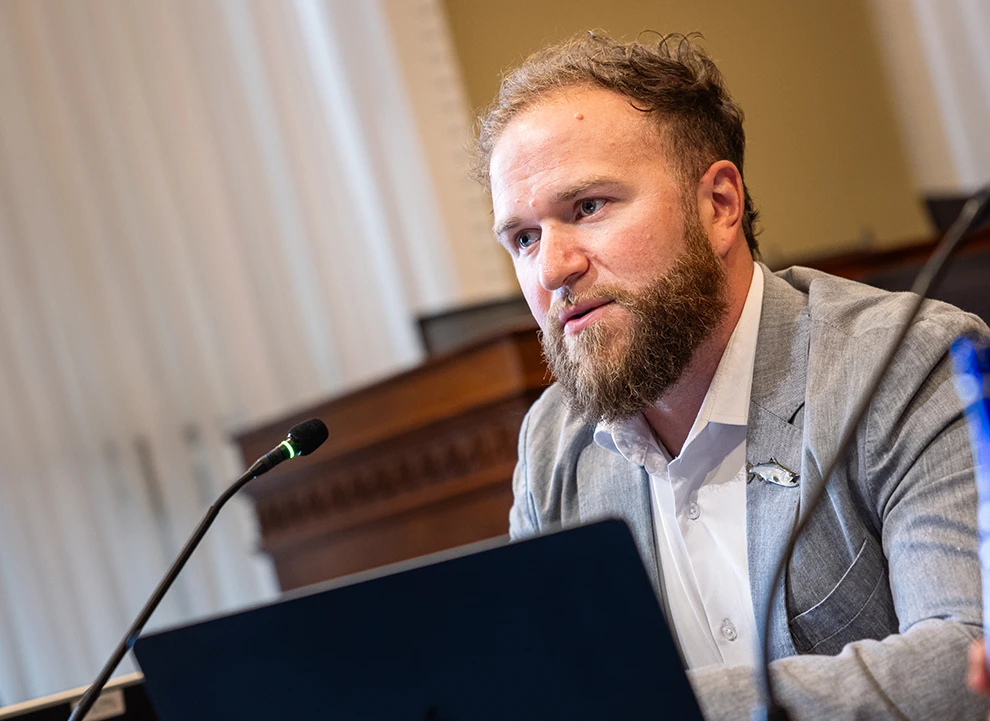
Noah Oppenheim, Principal, Homarus Strategies
The panel discussion was led by Noah Oppenheim of Homarus Strategies and brought together Jenni Wallace, Director, NOAA Fisheries Office of Policy; Monique Coombs, Director of Community Programs, Maine Coast Fishermen's Association; and Michael Nelson, Executive Committee Member, National Working Waterfronts Network & Chair of the Santa Barbara (CA) Harbor Commission.
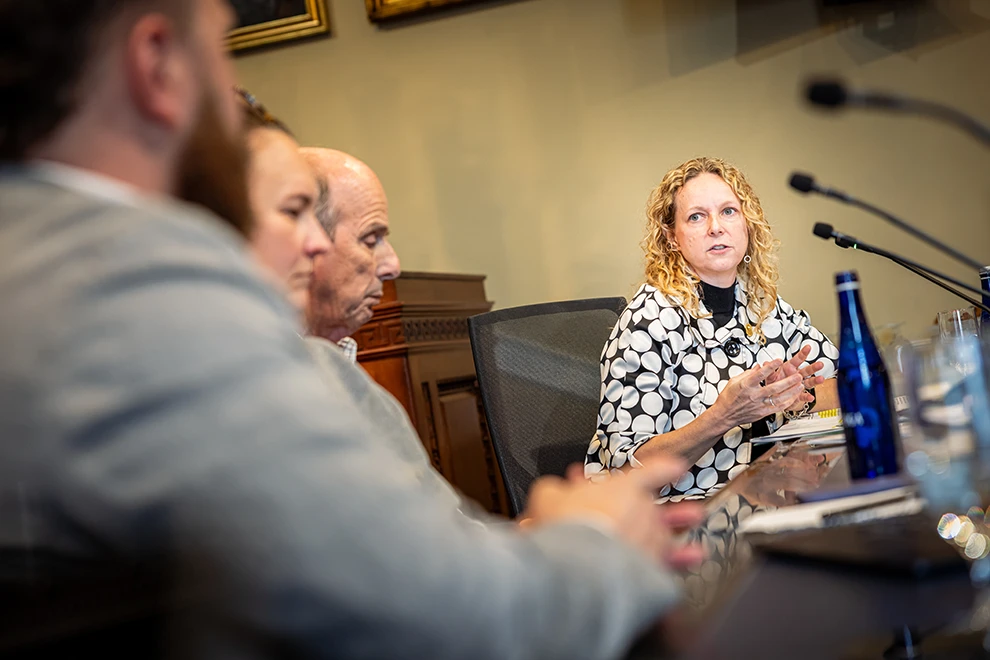
Jenni Wallace, Director, NOAA Fisheries Office of Policy
The discussion started with an acknowledgement of some important recent developments in the fisheries sector on a federal level that will help to include fishing communities in government programs and improve visibility and access to resources as an industry that is a food producer for the United States. Earlier this year, the U.S. Department of Agriculture (USDA) announced the creation of a new Office of Seafood, which will prioritize customer service and ease of navigation for American seafood cultivators, producers, and processors to access USDA programs. The Restoring American Seafood Competitiveness Executive Order was also announced at the beginning of the Trump Administration; it aimed to reduce regulatory burdens and increase the consumption of American-caught seafood. The America First Seafood Strategy was released as a follow-on to the Executive Order and was a main talking point for Wallace.
Coombs started off by highlighting the important role working waterfronts play to the fishing community of Maine and the Working Waterfront Inventory Report that her organization has taken on to better understand the current conditions and composition of working waterfronts and how they are being utilized to better inform policy priorities at a local, state, and federal level. She noted that working waterfronts are facing threats from gentrification and weather events that make it hard for fishermen and fisheries stakeholders to compete for waterfront space. Having an inventory report that keeps track of exactly what is happening and where can help inform policy decisions and help the fishing community better plan. She noted that the inventory report is replicable and would be good practice for other states facing similar issues.
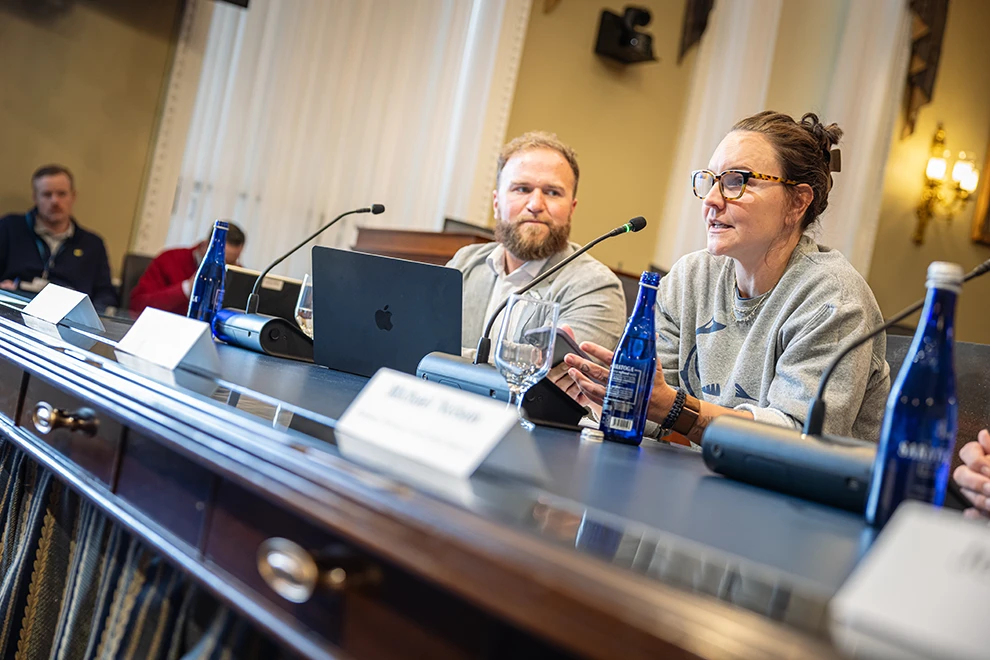
Monique Coombs, Director of Community Programs, Maine Coast Fishermen's Association
As part of the National Working Waterfronts Network, Nelson focused on two points that he deals with in representing a working waterfront in Santa Barbara. Management decisions that impact a working waterfront, such as a loss of a processor or rising fuel or insurance costs, have a direct impact on the fishery and the fishing community itself, and vice versa. When a new regulation or quota on a fishery is implemented, the whole waterfront community is impacted. He emphasized that working waterfront stakeholders need to be analyzed as a unit when looking at socioeconomic impacts of a management decision. He also noted that most stakeholders involved in a working waterfront are small business owners and if presented as such, might get more general support from lawmakers and policymakers.
Wallace spoke to the impact that MSA has had on our nation’s fisheries and spearheaded the stakeholder process which has been a proven management approach across many different sectors. She commended the USDA’s new Office of Seafood and shed light on the recently released America First Seafood Strategy, which all the panelists welcomed. The America First Seafood Strategy aims to sustain domestic seafood production, modernize critical infrastructure, improve market opportunities for American harvesters and processors, and ensure fair competition in U.S. and global markets. There is a section under the Rebuilding America’s Seafood Infrastructure titled “Rebuild American Working Waterfronts,” which directs federal agencies to work with existing stakeholders to better manage, modernize, and expand working waterfronts. Jenni also pointed out that her office is reviewing MSA’s National Standard 8. National Standard 8 requires that any MSA conservation and management measures to account for the importance of fishery resources to fishing communities and to minimize adverse economic impacts on them. The panelists spoke to how community impacts to working waterfront infrastructure can be shaped by management decisions and welcomed an approach that would more fully consider these factors in the context of federal fishery management.
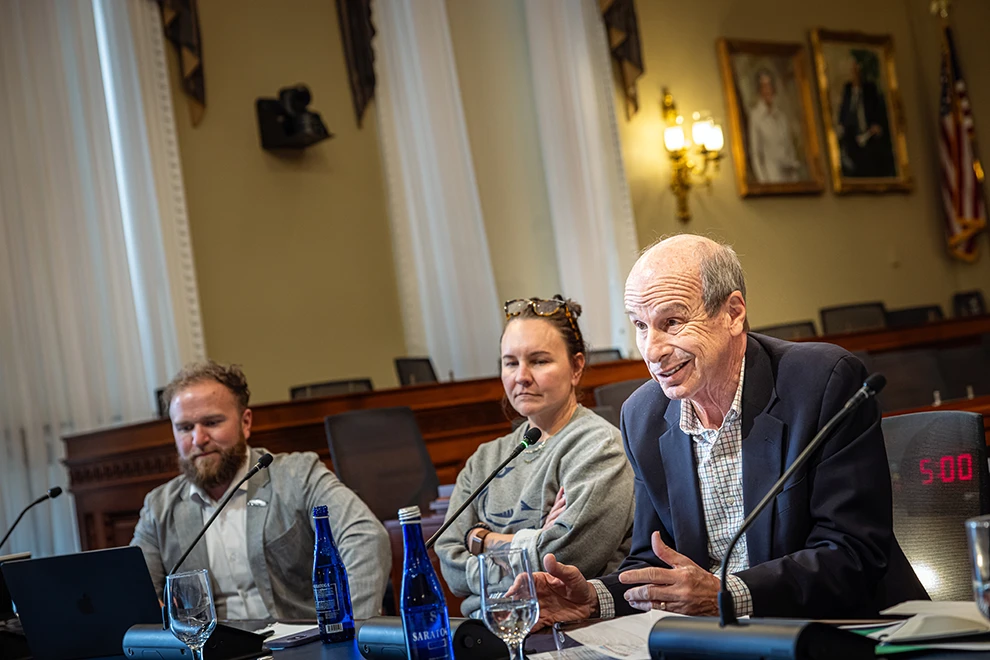
Michael Nelson, Executive Committee Member, National Working Waterfronts Network & Chair of the Santa Barbara (CA) Harbor Commission
Lastly, all panelists acknowledged that current federal support and programs are not designed to support working waterfronts. For example, working waterfronts inherently are prone to flooding impacts. Structures built over water generally cannot obtain coverage under the National Flood Insurance Program. This means businesses and stakeholders on a waterfront that sustain damage from storms and flooding have no access to insurance or disaster relief, leaving them on the hook for all clean up and rebuilding costs. For businesses with small margins, these costs often put them out of business and result in a developer buying up the waterfront space for residential or hospitality purposes.
Working waterfront support has drawn bipartisan sponsorship in both the House and Senate, and many of the most useful solutions are modest in cost: aligning program rules, clarifying eligibility, and coordinating agencies so that existing federal dollars and private capital reach the infrastructure they were meant to support. Panelists stressed the value of acting before major storms rather than after, to protect jobs, domestic seafood supply chains, and coastal communities at comparatively low cost.
To close, Nelson referenced a statement by NOAA leadership at a recent conference that resonated with him: “The first 50 years of Magnuson-Stevens was good for fish ... and the next 50 years will be good for fishing communities.” Supporting working waterfronts is a good place to start.
 Regional Headquarters
