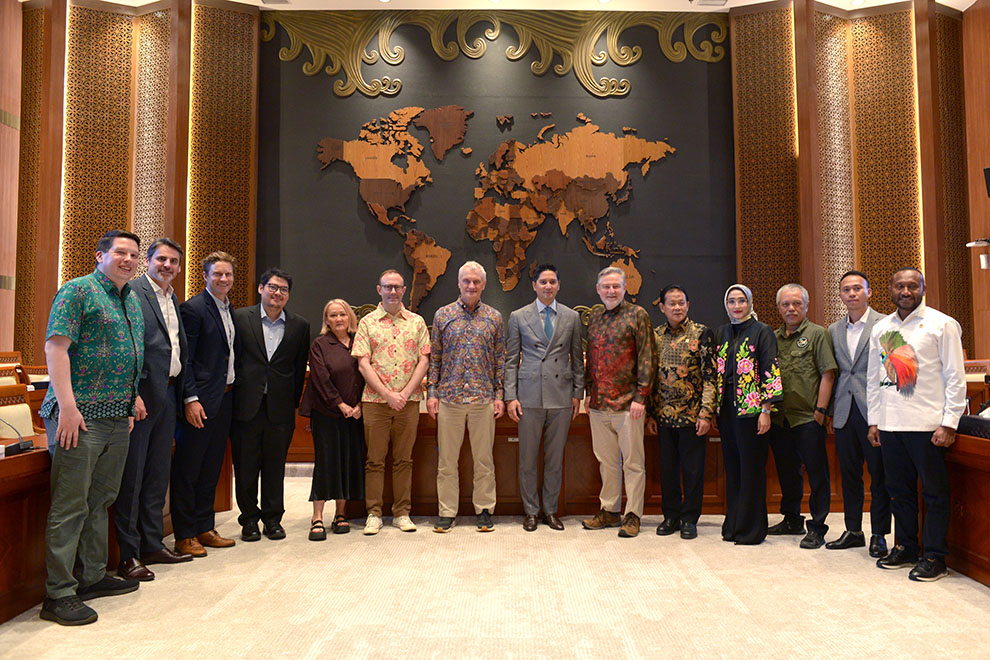
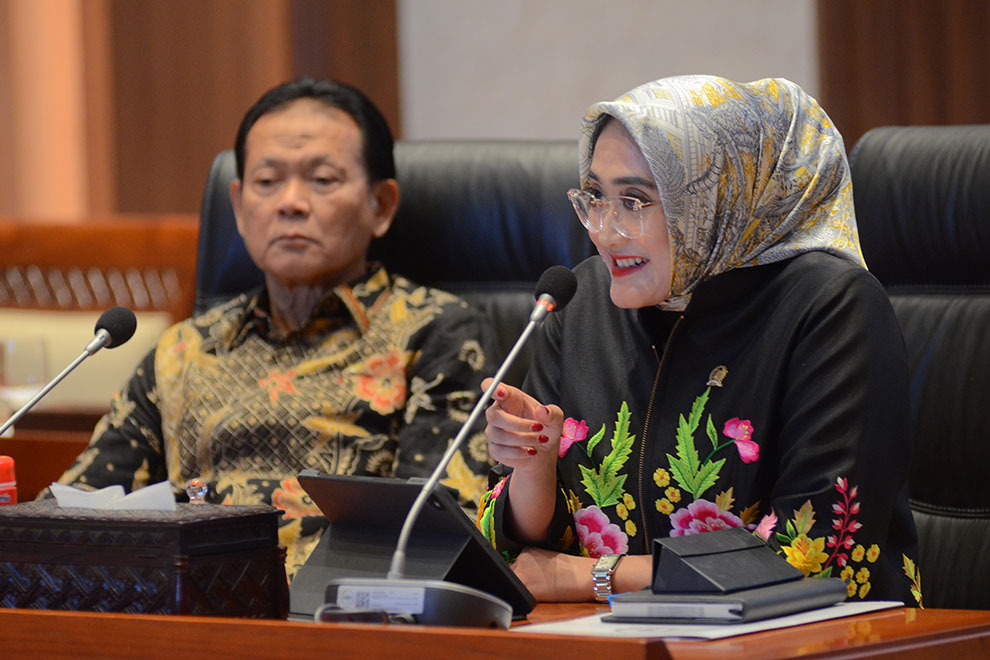
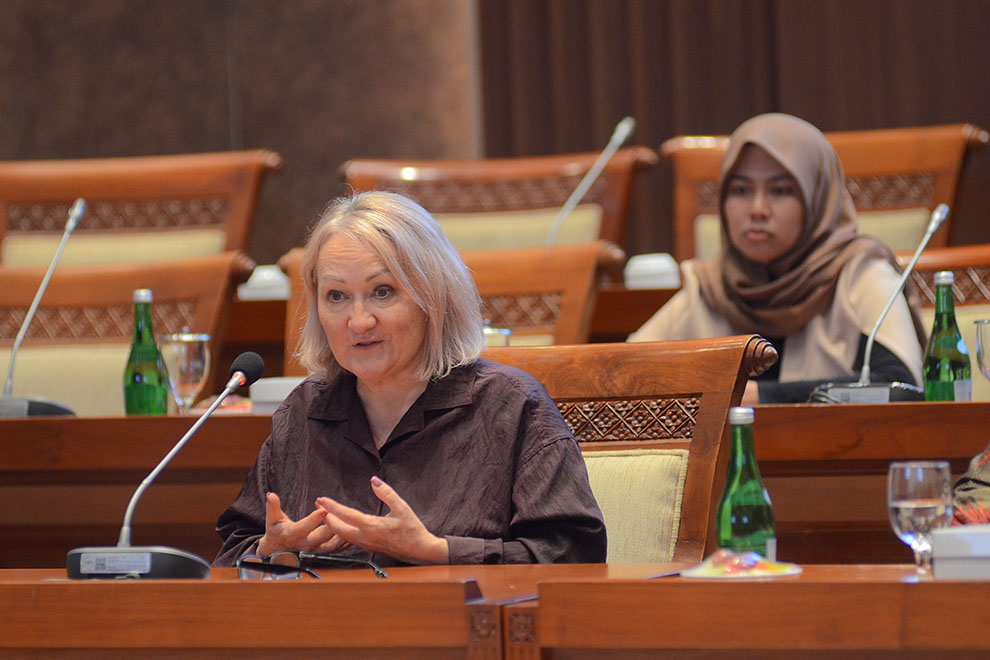
ICCF Indonesia, as Secretariat of the Conservation Caucus (Kaukus Konservasi) in the Indonesian House of Representatives (DPR RI), supported a parliamentary hearing between the DPR RI Conservation Caucus and the United Kingdom's All-Party Parliamentary Group (APPG) on International Conservation, for which ICCF UK serves as secretariat in the UK Parliament. The session was chaired by Hon. G. Budisatrio Djiwandono (Gerindra - East Kalimantan), who serves as Vice Chair of Commission I DPR RI and Co-Chair of Kaukus Konservasi, and brought together members of the Conservation Caucus alongside UK parliamentarians who had just returned from a week-long fact-finding mission to Central Kalimantan with the Borneo Orangutan Survival Foundation (BOSF).
The hearing built on momentum from the APPG's mission to Indonesia (26 March – 4 April 2026), during which UK MPs visited Sebangau National Park, indigenous communities, orangutan pre-release islands, and the Nyaru Menteng rescue centre. The session aimed to translate the delegation's field experience into a focused policy dialogue on conservation financing, peatland protection, land use, and inter-parliamentary cooperation.
Land Use: The Cross-Cutting Theme
Land use emerged as the dominant issue of the hearing, raised from both sides and threaded through nearly every exchange.
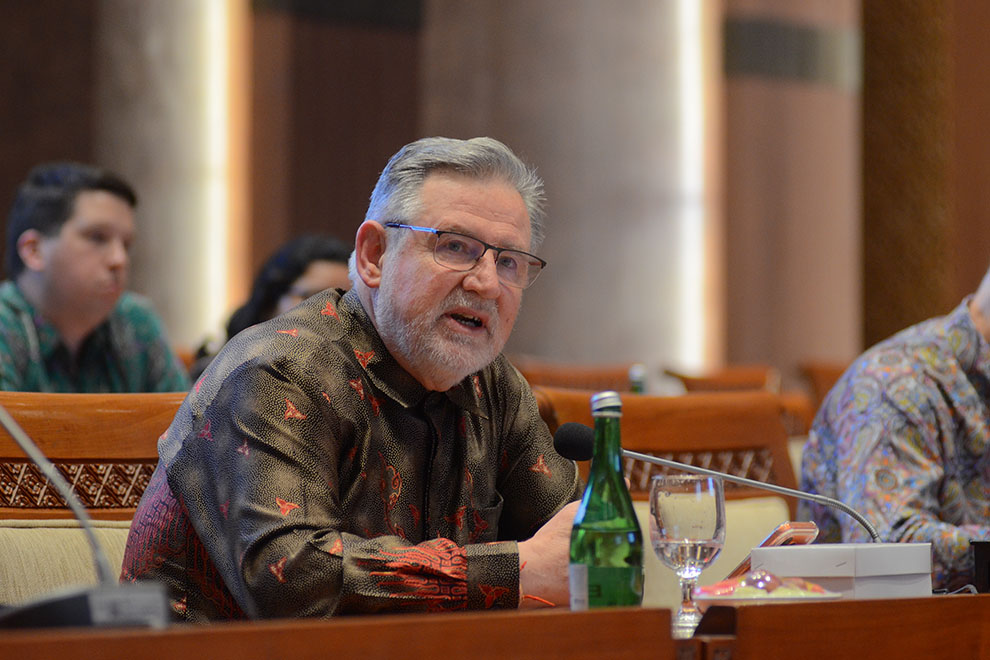
Barry Gardiner MP
Barry Gardiner MP (Labour - Brent West), Chair of the APPG, built on this by introducing the UK's forthcoming national land use framework, a strategic planning tool integrating nature-based solutions, development, and agriculture. He asked the Indonesian side directly about the competing tensions between international commitments and local land provision.
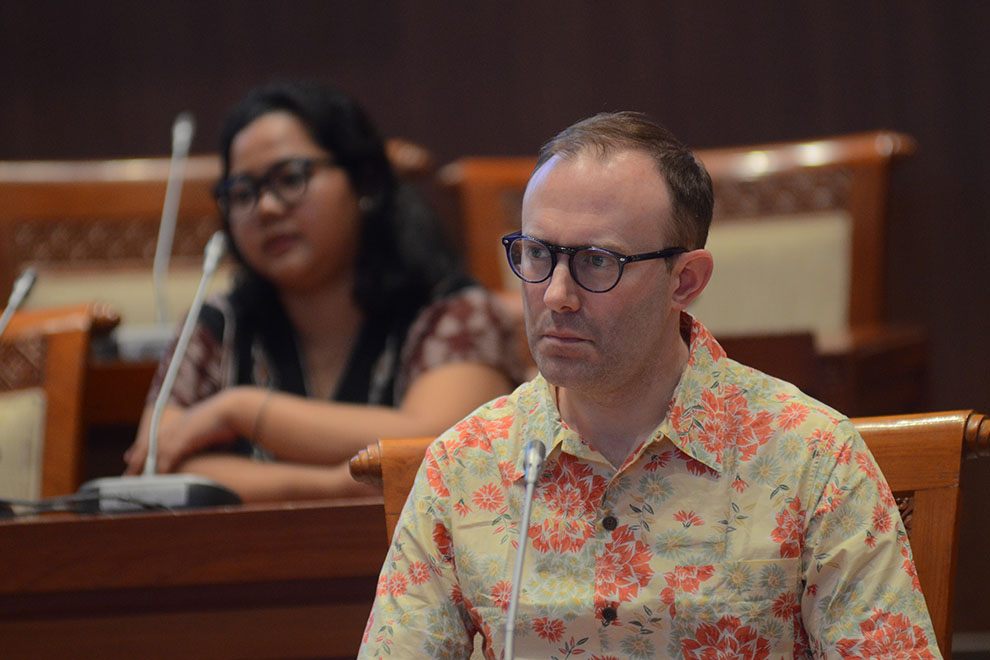
Blake Stephenson MP
Blake Stephenson MP (Conservative - Mid Bedfordshire) drew a direct parallel between his constituency, 85 percent agricultural land with significant lowland peat, and Indonesia's challenge of balancing food security with conservation. He noted that young people in his constituency consistently identify the environment as their top priority and expressed a personal commitment to peatland restoration and securing a new national forest for Bedfordshire.
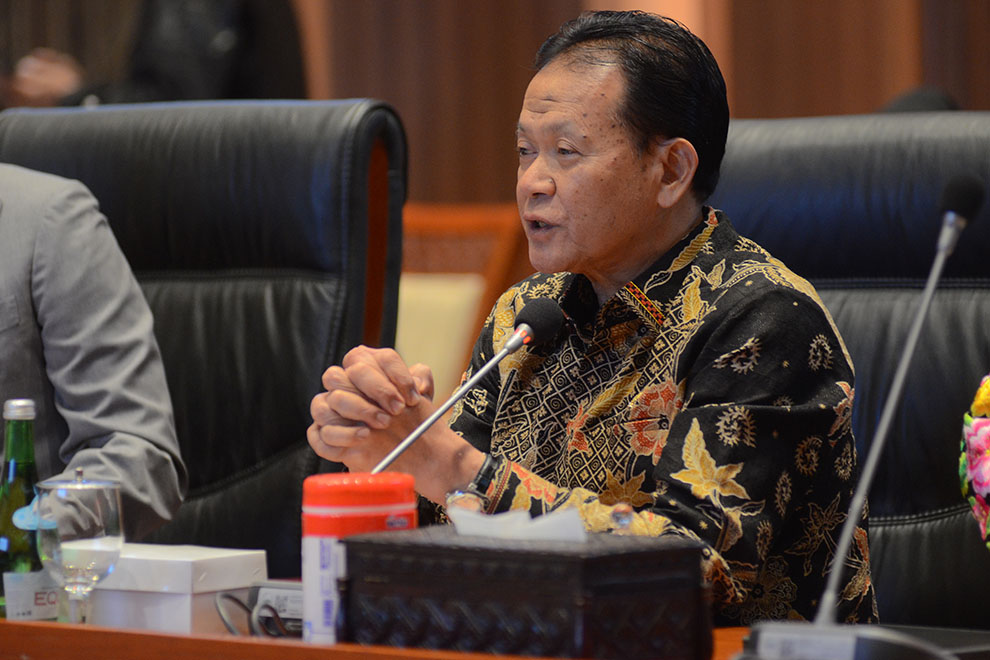
Hon. Prof. Rokhmin Dahuri
Hon. Prof. Rokhmin Dahuri (PDI-P - West Java VIII) responded with a substantive legislative point: Indonesia's Spatial Planning Law (UU 26/2007) originally required at least 50 percent protected area coverage per island, but this provision was abolished under the Omnibus Law. He stated his personal commitment to restoring it, citing rapidly declining forest coverage in Sumatra. Hon. Dahuri also framed the Indonesian approach to conservation, citing the IUCN definition from 1992 as "the optimal harmonious composition between economic growth and environmental protection," explicitly distinguishing it from a no-take zone or preservationist approach.
The Chair reinforced this, noting that 60 percent of Indonesia's population lives in Java and that previous laws requiring at least 30 percent forest coverage per area need to be re-examined and enforced. He spoke candidly about the pressures of mining and plantation expansion in East Kalimantan, describing them as giving him "nightmares" while acknowledging their economic importance.
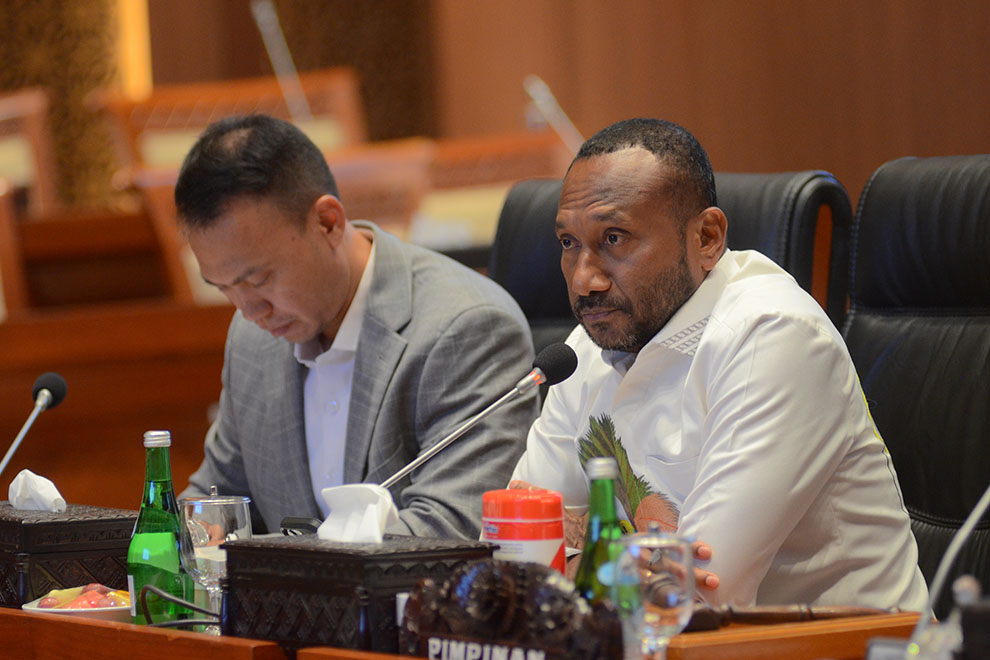
Hon. Yan Permenas Mandenas
Hon. Yan Permenas Mandenas (Gerindra - Papua) offered a contrasting perspective from Eastern Indonesia, noting that Papua holds approximately 6.3 million hectares of largely intact peatland — around 28 percent of Indonesia's total. In Papua, he argued, any conservation framework must ensure indigenous communities share in the benefits, whether through carbon payments, ecotourism, or other opportunities.
Conservation Finance and Ecotourism
The hearing's most developed policy exchange focused on how to finance conservation sustainably.
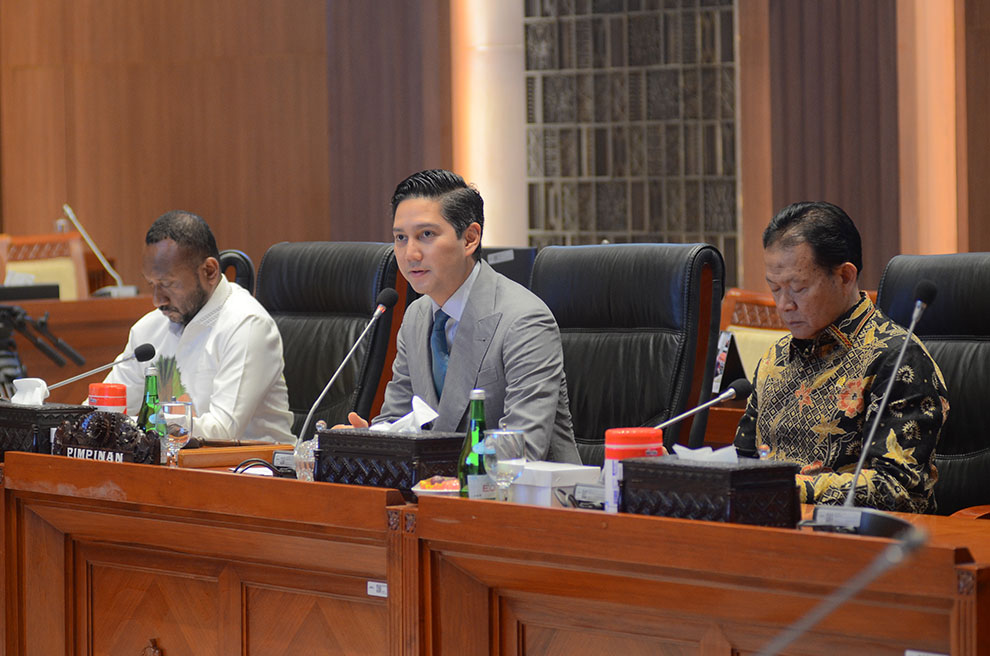
Hon. G. Budisatrio Djiwandono
Hon. G. Budisatrio Djiwandono made a significant intervention on institutional design, arguing that Indonesia needs new governance mechanisms, transparent entities that can receive private and philanthropic funding for conservation. He stated openly: "I have no problem with NGOs such as BOSF. The more of them doing work here in the regions, the better."
He referenced his mandate from the President of the Republic of Indonesia to develop a multi-stakeholder approach spanning Way Kambas National Park, broader protected-area governance, and ecotourism, and noted that revision of carbon market legislation is a starting point for creating these mechanisms.
Barry Gardiner MP pushed specifically on ecotourism models, asking about the choice between high-end, low-volume tourism and mass-market approaches. The Chair endorsed a hybrid model, combining premium ecotourism with differential pricing for domestic and international visitors, while firmly rejecting mass tourism as the primary approach, citing pressures seen in destinations like the Galápagos. Indonesia, he noted, is studying models from Africa and Costa Rica, but the key condition remains: any model must solve the livelihood problems of local communities.
Barry Gardiner also singled out BOSF's community engagement model as one of the most impressive things the delegation witnessed in Borneo, highlighting that local communities are the ones doing the work, blocking canals, rewetting peat, creating rural employment, and framing BOSF's approach as "not just about orangutans, not just about people, but about economic and social regeneration."
Blue Carbon and Mangroves
Hon. Prof. Rokhmin Dahuri introduced blue carbon as a major dimension of Indonesia's conservation potential, noting that 70 percent of Indonesian territory is marine and that mangrove carbon sequestration capacity is four times that of terrestrial forests. He cited the Presidential commitment to replant 600,000 hectares of mangroves and reported that 50,000 hectares of abandoned fishing ponds have already been earmarked for mangrove restoration. He called directly on the UK to support Indonesia with financing and technology transfer for carbon trading.
The Chair reinforced this by referencing the DPR RI Conservation Caucus (formerly the Oceans Caucus), supported by ICCF, and Indonesia's 3 million acres of mangrove as an untapped conservation and economic asset.
Soil Health and Agricultural Sustainability

Hon. Ravindra Airlangga
Hon. Ravindra Airlangga (Golkar - West Java V), raised soil health as a critical issue, referencing Law 41/2009 on protected agricultural lands and asking the UK delegation directly about soil degradation strategies.
Barry Gardiner MP responded with visible passion, calling soil health "the button closest to my heart" and citing estimates that some UK agricultural soils may have only 30 years of productive life remaining. He committed to sharing UK select committee inquiry reports on soil health with the Indonesian side and emphasised the link between nitrogen overuse, river eutrophication, and long-term soil degradation.

Rt. Hon. Graham Stuart MP
Rt. Hon. Graham Stuart MP (Conservative - Beverly and Holderness) recommended that Indonesia further engages its partners on conservation issues relating to land degradation and soil health at scale.
Looking Ahead
The hearing marked the first formal parliamentary exchange between the DPR RI Conservation Caucus and the UK APPG on International Conservation. What distinguished it from a standard courtesy call was the specificity of the discussion: concrete policy questions on ecotourism models, carbon market legislation, spatial planning reform, and soil health - grounded in the UK delegation's week-long field experience with BOSF in Kalimantan.
In closing, the Chair expressed openness to continued engagement with the UK APPG, facilitated by ICCF, and signalled interest in replicating conservation financing models from other jurisdictions while developing approaches suited to Indonesia's specific regulatory and community context.
 Regional Headquarters