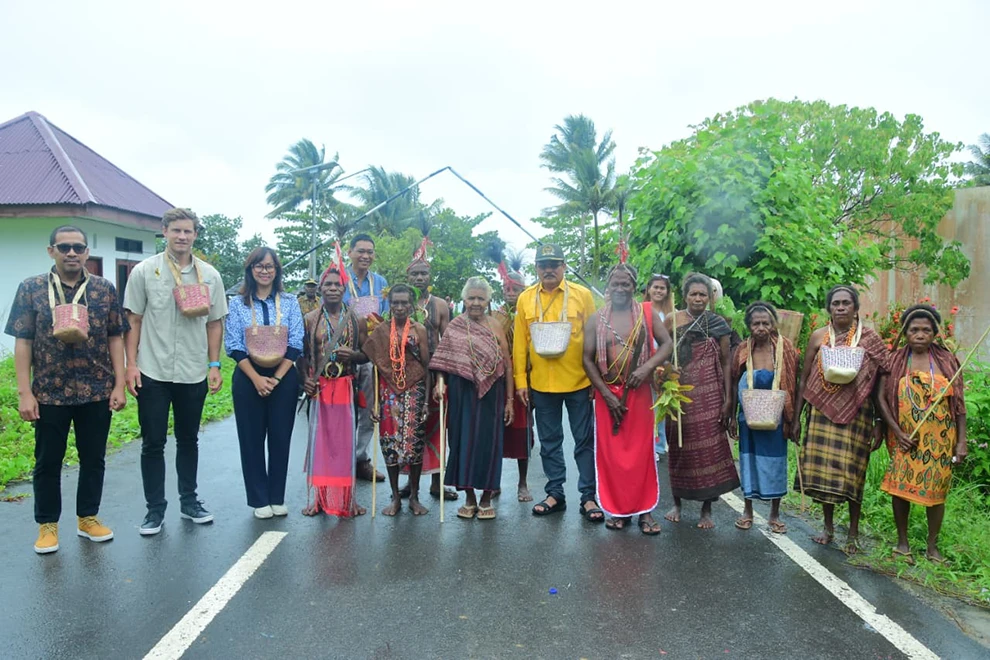
Malaumkarta, Sorong — In the heart of Moi ancestral land, ICCF Indonesia, members of DPR RI, and EcoNusa witnessed how cultural tradition and environmental stewardship intersect in Malaumkarta village—one of Southwest Papua’s most promising Indigenous conservation models. Through customary law, participatory mapping, and the revitalised practice of egek, the community has built a governance system now recognised nationally as an emerging Other Effective Area-Based Conservation Measure (OECM) contributing to Indonesia’s 30×45 marine conservation target.
Indigenous Governance and OECM Recognition
The Malaumkarta Indigenous community has mapped 14,000 hectares of customary forest and 4,000 hectares of marine territory, documenting cultural zones, sacred areas, and resource boundaries. The forest area is currently proposed for SK Hutan Adat, while the mapped marine area, developed since 2017, continues to be developed as a community-led conservation zone that aligns with Indonesia’s national efforts to identify and strengthen OECM initiative.
This inclusive mapping process involves elders, women, and youth, ensuring that ecological knowledge and customary law continue across generations.
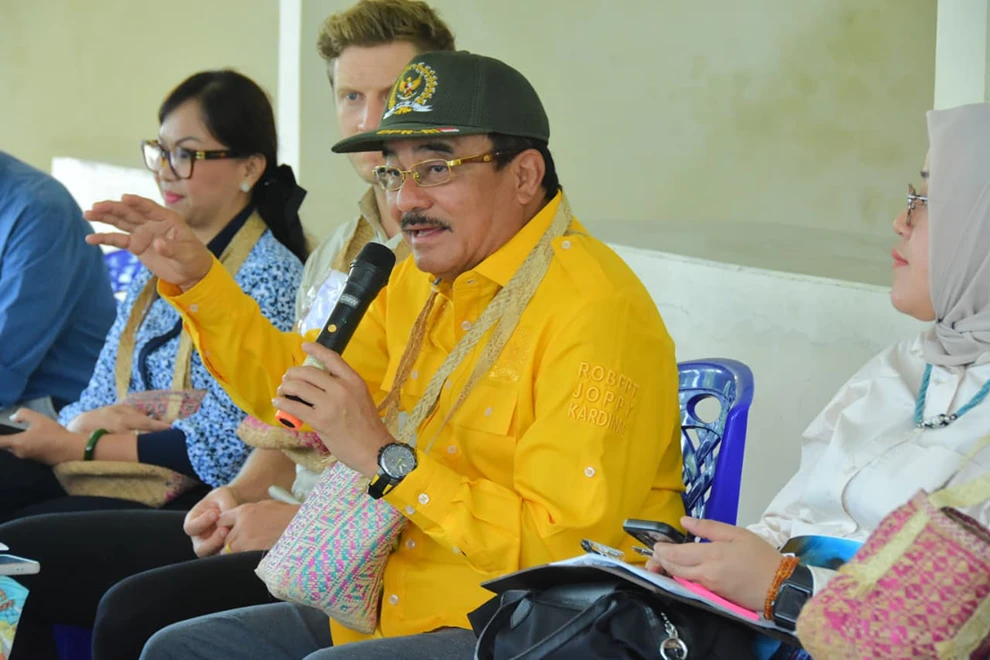
Hon. Robert Joppy Kardinal emphasized its national policy relevance:
“From the meeting with the community, we gained many valuable references. There are customary rules that can be taken to the central level as a basis for conservation policy.”
Egek: Traditional Knowledge as Conservation
At the core of Malaumkarta’s success is egek, a customary system that temporarily prohibits resource extraction to allow ecosystems to recover. Applied to both land and sea, including lobster, lola, and sea cucumber, egek embodies the principle of taking only what is needed while letting nature regenerate.
The annual Egek Festival celebrates Moi identity and strengthens conservation education among youth.
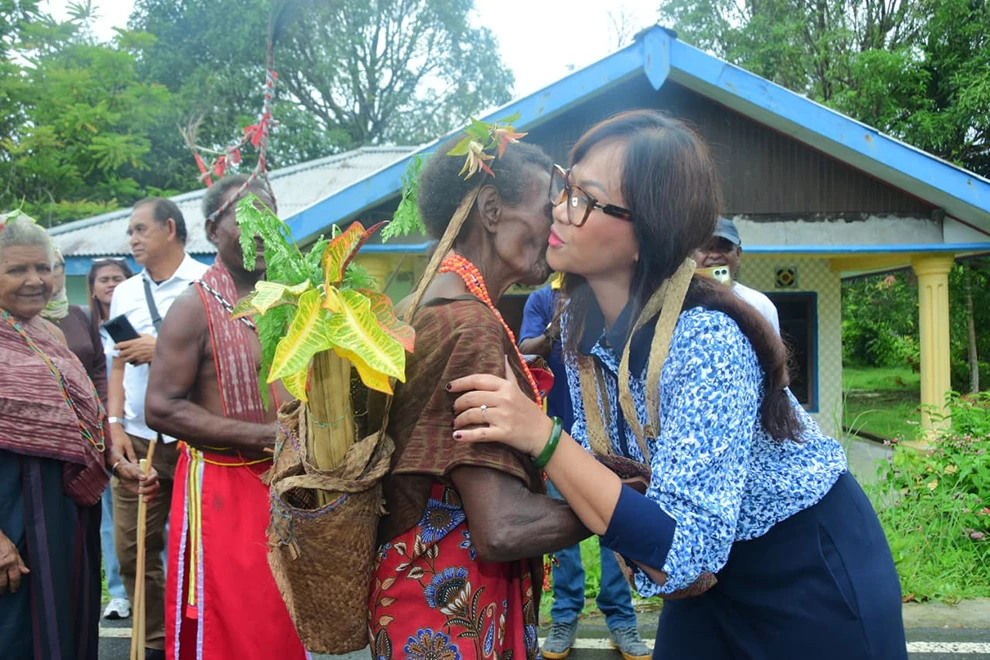
DPR RI member Hon. Faujia Helga Tampubolon underscored its importance:
“The Egek Laut tradition proves that Indigenous communities can protect the sea wisely without losing their livelihoods. This is a true blue economy practice born from local wisdom. Customary approaches like this align strongly with Blue Economy principles. Development does not need to harm nature; from local culture, we learn how to live harmoniously with the environment.”
Ecological and Livelihood Impact
The revitalisation of egek has resulted in visible ecological recovery, greater abundance of key marine species, healthy coral and mangrove ecosystems, and the presence of endemic fauna such as cendrawasih, tree kangaroos, and kuskus. Economically, regulated harvest cycles have improved income stability, while nature-based tourism—birdwatching, cultural tours, and marine activities—offers additional livelihood pathways. Community-managed clean water and electricity systems further demonstrate local self-reliance.
Challenges and External Pressures
Malaumkarta continues to face challenges, including limited market access for marine products, external threats such as illegal fishing, chemical use (potas), and wildlife poaching, and the need for stronger enforcement even with existing adat patrol units supported by Dandim, Polres, and the Prosecutor’s Office. These issues require closer coordination between government agencies, NGOs, and customary institutions.
Recommendations and Way Forward
The visit highlighted several pathways to strengthen Indigenous-led conservation in Malaumkarta. DPR RI is encouraged to support the issuance of SK Hutan Adat, reinforce policy frameworks that recognise OECM and adat (egek) governance, and promote replication of the Malaumkarta model across Papua and Indonesia. Government agencies are expected to improve market access and coordination to address illegal activities. Conservation partners, including ICCF, EcoNusa, YKAN, and others, should continue supporting mapping, monitoring, sustainable enterprise development, and cultural education, while strengthening platforms such as the Egek Festival for wider engagement. At the community level, sustaining youth participation, upholding customary law, and collective decision-making remain essential to safeguarding cultural values and ensuring long-term environmental stewardship.
 Regional Headquarters