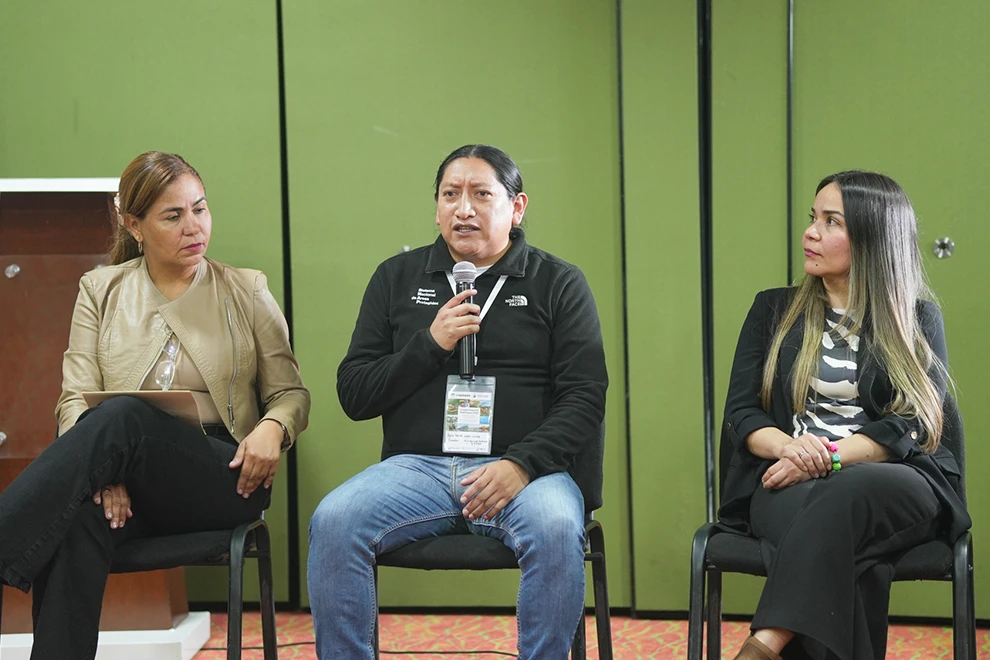
On March 18, 2026, during the Regional Council of RedParques, caucus members Senator Alfonso de Urresti (Chile) and Representative Yenica Acosta (Colombia) participated in a high-level panel on Integrated Fire Management (IFM) and the financial sustainability of protected areas. The panel was co-hosted by the Amazonia+ Program—funded by the European Union and implemented by the Italian Agency for Development Cooperation (AICS), Expertise France, and the Foundation for the Internationalization of Public Administrations (FIAP) —and with the support of the ICCF Group.
The panel created a space to explore how countries across the region are integrating IFM into the management of protected areas, identifying key opportunities for sustainable financing, regional cooperation, and legislative support to strengthen the prevention, management, and restoration of ecosystems affected by wildfires.
Alongside the caucus members, the discussion featured distinguished voices from across Latin America, including technical experts such as Byron Lagla, Director of Protected Areas at Ecuador’s Ministry of Environment and Energy, and María Angélica Arenas, IFM expert at Colombia’s Ministry of Environment and Sustainable Development, fostering a rich exchange between policymakers and practitioners.
As the frequency and impact of forest fires intensifies, panelists emphasized the urgent need to move beyond reactive approaches toward comprehensive strategies that integrate prevention, community engagement, ecosystem restoration, and long-term financial sustainability.
Key insights from the panel included:
- The importance of strengthening governance and interinstitutional coordination
- The critical role of local communities in prevention and resilience
- The need to scale innovative financial mechanisms, including sustainable finance for protected areas, public-private partnerships, and payments for ecosystem services, among others.
- The value of regional cooperation and legislative action to address shared environmental challenges across borders.
This dialogue reaffirmed that IFM must be a central pillar of biodiversity conservation and sustainable development strategies in Latin America.
At the ICCF Group, we remain committed to fostering collaboration between the public and private sectors and international cooperation, supporting informed decision-making and advancing solutions that strengthen both natural capital and economic resilience.
 Regional Headquarters